

Today we will explore types of rock climbing, be ready! Climbing is becoming a sporting trend in all countries. Recently, this discipline has even become one of the Olympic sports. But here questions immediately arise: where to start, how to start, and whether necessary. Forget fears and doubts. Climbing is worth it!
Using the list below, you can choose the climbing that you enjoy the most. The most common types of climbing are bouldering, top rope climbing, and lead climbing.
Below is a list of rock climbing and climbing activities. Let’s find out.
- What is rock climbing?
- Types and Styles of Climbing
- Free Climbing
- With ropes
- Without ropes
- Aid climbing
- Steps to start rock climbing
- Find a qualified guide
- Determine the type of climbing you want to try
- Gear up
- What do you need for rock climbing?
- Find your route
- FAQs
- What are the 3 types of rock climbing?
- What is the most common type of rock climbing?
- Are sport climbing and lead climbing the same thing?
- Conclusion
What is rock climbing?
Rock climbing was once an element of mountaineering. Climbers practiced this skill to conquer the mountain in one way or another, and at the same time, they independently chose the difficulty level for themselves. Now it’s an independent discipline and you don’t have to be a mountaineer to climb.
There are two types of climbing: outdoor and indoor. In the first case, you practice climbing on rocks, that is, on a natural terrain, and in the second, on an artificial one, that is, on a climbing wall. The choice depends on your mobility and location.
Types and Styles of Climbing

Free Climbing
Free climbing describes the method of climbing, not the climbing itself.
Free climbing is when the climber hangs directly on the rock and only uses the features of the rock to hold on to climbing. All equipment used in free climbing is for fall protection only.
Free climbing is the basis of most modern climbing. In addition, it is the most difficult physically and requires a lot of skill and effort.

With ropes
Climbing with a rope attached to a fall protection harness. It consists of three main categories: traditional (or “traditional”), sport, and top rope. Top rope climbing involves placing an anchor over the incline before climbing it. Traditional and sport climbing are forms of rock climbing where the climber starts at the bottom of the climb and sets up guards to buckle the rope as they ascend.

Top Rope Climbing
Roped climbing is one of the most common types of climbing. It is considered one of the safest types of rock climbing. This can be done either indoors at the gym, some gyms are geared up for this as the main form of climbing, or outdoors where you can set up ropes from the top of the climb.
The main advantage of such climbing is the much smaller distance you can fall while climbing. This is because the climber is always below the point where the rope is attached to the wall.
Climbing the top rope is also much easier to set up and the equipment needed. You also don’t have to worry about carrying equipment or knowing how to hook it up or secure yourself to the top of the climb. For these reasons, such climbing is great for beginners as they don’t have to worry about anything other than climbing.

Lead climbing
The leader plots the route by attaching a rope to bolts and hooks that are firmly set into a wall or stone.
After you become proficient at roped climbing in the gym or outdoors, you’ll be ready to progress to lead climbing, initially on sport-climbing routes.

Trad climbing
In the “old days” of the 1980s, traditional climbing was simply called climbing. It wasn’t until sport climbing became popular that a name had to be coined to distinguish this style of climbing.
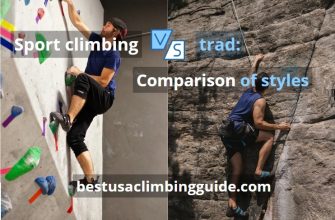
Traditional climbing or trad climbing is a form of free climbing in which climbers attach their protection to a wall using removable anchors. Several different types of anchors can be used for this.
- Cams
- Nuts
- Big Bros
- Hexes
- Tricams
- Alpine Slings
This equipment is called the trad climbing “stance”.
The good thing about trad climbing is that you can climb anywhere. Sport climbing is limited to having pre-installed bolts to secure your protection from the rock, while trad climbers can climb anything efficiently as long as there is room to place their gear in the wall.
Many climbers view trad as the highest form of climbing because the trad climber must be completely independent on the route and cannot rely on pre-set anchors or equipment to protect them.
Trad climbing is also one of the least invasive types of rock climb since after that all equipment is removed and minimal damage is done to the rock.
Trad climbing also can be multi-pitch climbing. Multi-pitch climbing is the ascent of climbing routes with one or more stops at a belay station. Each section of climb between stops at belay stations is called a rope. The trad climber climbs onto the field, placing equipment to secure himself at the belay station.
The overall purpose of these stops is to allow the second climber to ascend to the lead climber’s point while collecting protective equipment from the route in the course of the lead climbing.

Sport climbing
Sport climbing is a type of rock climbing in which a rope is attached to permanent bolts drilled into the rock to prevent climber falls.
Sport climbing focuses on climbing areas that cannot be protected by removable protective equipment due to the lack of slots, holes, etc. in which traditional protection could be placed.
Because the bolts are pre-drilled, sport climbers only need to put on quickdraws (a piece of strap that connects two carabiners) to attach their rope to the bolts.
Sport climbers primarily use quickdraws (two carabiners connected by a loop of sewn-in webbing) to climb routes pre-set with security bolts (usually on rocks that cannot be secured with removable equipment).
Sport climbing usually includes lead climbing and topping techniques, but free soloing and deep water solo climbing on sports routes are also sometimes possible.

Simul Climbing
Simultaneous climbing is a method or style of climbing in which all climbers climb at the same time while tied to the same rope. The guard is placed by the first member of the rope team and the last member removes the pieces of climbing equipment.
The length of rope used during simultaneous climbing varies but is often between 50–100 feet.
In most cases, the climbing team maintains multiple protection elements between them to prevent the system from failing if one of the elements fails.
Usually, a belay device is not used. However, the first climber may be insured by the second until enough rope is pulled out for the lead climber to avoid falling off the ground. Similarly, the lead climber may use a belay device when the second approach the belay station to avoid a big fall.

Alpine ice climbing
Alpine climbing involves climbing rocks, snow, and ice. Alpine climbing typically uses picks, crampons, ropes, and protective equipment while the climber scales frozen waterfalls, rocks, frozen slabs, and other terrains. Ice climbing is of two types of rock climbing:
- Alpine ice climbing
It is a type of ice climbing used in mountaineering.
- Ice water
Those who want to test their climbing technique climb up the frozen waterfall.
Alpine ice is frozen sediment, while water ice is a frozen flow of water. Climbing styles vary on each type of ice, and the classification of ice climbing is different for both.

Without ropes
It’s climbing without fall protection. It comes in 3 main categories: bouldering, deep water solo, and free soloing.
Bouldering
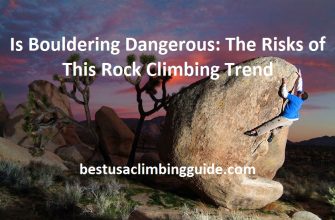
It is the second most popular rock climbing style in the world. Bouldering is free climbing without a safety net that takes place on rocks and walls that are low to the ground so that the risk of climber falls is minimal.
Bouldering is great because of its simplicity, all you need are climbing shoes and some chalk and you’re good to go. If you’re going outside, all you need to add is a boulder mat and you’re good to go. This is one of the reasons why he is so popular now.
You can boulder outdoors alone, but it’s much safer to go with friends. When you boulder outdoors, you usually have a “spotter” with you. This is the one who will stand behind the climber and, if he falls, direct him to the climbing mat.
Deep water solo
Deep Water Solo (DWS) is a form of solo climbing based solely on the presence of water at the base of the climb to protect against injury from falls from routes that are generally of high difficulty. It can also be done when climbing over reservoirs, rivers, and even pools.
Often a lifeboat or other small boat is left at the scene to pick up a fallen climber, as a fall from a higher route can still pose a risk of loss of consciousness upon hitting the water, which can lead to drowning.
free soloing
During a free soloing ascent, the climber leans on the rock with only their hands and feet as protection against falls. Since free soloing mountain climbing is very dangerous, most practicing climbers are only those who have practiced with a rope many times.
This is the most dangerous type of climbing and it is not recommended for anyone to try this type of climbing. Even if you are a very advanced climber, this is EXTREMELY DANGEROUS.
Aid climbing
Aid climbing is one of the first types of climbing. This is when climbers use equipment such as ladders to scale the rock. They are attached to the wall with hooks, cams, nuts, or pre-installed bolts. With aid climbing, you are climbing with your gear without using the rock to support your weight.
Aid climbing requires quite intensive equipment, as the climber needs to place equipment both to protect himself in the event of a fall and to advance upwards.
Although most aid climbs involve long routes that can take several days to complete, any route can turn into an aid climb if the climber uses climbing equipment. However, for the most part, AID climbing involves slowly moving up the hill as you hang, pull, and step on the climbing gear.

Steps to start rock climbing
Find a qualified guide
Many start with experienced friends, or you can find a certified instructor to teach you the basics.
Determine the type of climbing you want to try
Climbing has a wide range of disciplines, each requiring different equipment and training. Your choice of climbing style also helps determine the places and routes you can climb. As a beginner, you will start with indoor climbing, bouldering, or outdoor rock climbing.
Gear up
Whether you start at the climbing gym or climb with a guide, the equipment you need is usually provided. Always check your climbing gear before climbing – whether you own it or rent it. Frequent use inevitably results in some wear and tear.
What do you need for rock climbing?
Climbing Clothing
Wear clothes that don’t restrict you and won’t get in the way of you or the rope. Your clothing needs to breathe, absorb sweat, and dry quickly to keep you warm and comfortable while climbing.
Rock Climbing Shoes
Climbing shoes protect your feet by providing the friction you need to keep your footing. Such shoes should fit snugly, but not too tight.
Climbing Helmet
When climbing outdoors, you should always wear a helmet specifically designed for climbing. Climbing helmets are designed to protect the head from falling rocks and debris, and some are designed to protect in the event of a fall.
Climbing Harness
If you are not bouldering, you will need a climbing harness. The harness consists of two main parts: a waist belt and leg loops. Many harnesses are conveniently equipped with adjustable or removable leg loops.
Chalk
Like gymnasts, climbers use chalk to improve their grip. The chalk soaks up the sweat on your hands.
Carabiners
These strong, lightweight metal rings with spring-loaded closures connect climbing ropes to safety equipment such as bolts, nuts, and cams.
Belay Device
This is used to help the belayer control the rope.
Climbing Ropes
There are two categories of ropes: Dynamic: This is a climbing rope because it has elasticity built into it. It is designed to absorb the energy of a fall, even though the force of the fall may be very large. Static: This is a relatively stiff rope that, unlike the dynamic rope, does not have much elasticity. It is used for descent and rescue.
Climbing Protection
Often referred to simply as “pro”, this group of devices is used in traditional rock climbing to attach a rope to a rock.
Find your route
There is a rating for climbing difficulty. The technical climbing portion of the scale runs from 5.0 to 5.15, with difficulty increasing as the decimal portion of the rating increases.
Broadly speaking, easier climbing routes are rated between 5.1 and 5.5. These are the types of routes that your instructor will suggest to you initially.

FAQs
What are the 3 types of rock climbing?
There are three main types of climbing: traditional (or “traditional”), sport, and roped climbing. Roped climbing involves placing an anchor over the incline before climbing it. Traditional and sport climbing are forms of rock climbing where the climber starts at the bottom of the climb and sets up guards to buckle the rope as they ascend.
What is the most common type of rock climbing?
Free climbing is the type of climbing that most climbers do: climbing using hands and feet to find handholds and footholds to get up the rock. This differs from free soloing in that you have a rope tied to a harness around your waist and a belay partner holds the other end of that rope. Also, keep in mind that free soloing is extremely dangerous.
Are sport climbing and lead climbing the same thing?
Both sport climbing and traditional climbing are a form of rock climbing, which means that the climber who climbs first is not protected by a rope from above.

Conclusion
If you’re looking for fitness, fun, and a healthy dose of adrenaline, rock climbing is the way to go.
Each of these types of climbing is different and challenging in its way. It’s always important to gradually increase the difficulty and have the right equipment – no matter what type you choose.
Read also: Bouldering vs. rock climbing – Are they similar?